Object Removal Detection
Object Removal is a query that triggers an alert when an object is taken from a scene. It uses windowing to detect the presence of data in one window and its absence in the subsequent window. If the object is taken, it triggers an alert.
Prerequisites
- IRIS+ Professional is configured with at least one indexer.
- Query types and classifiers have been registered.
- At least one video has been added.
Setup
-
Select one or more videos from your workspace Click +Set up New Query.
-
Select Object taken from the list of query types.
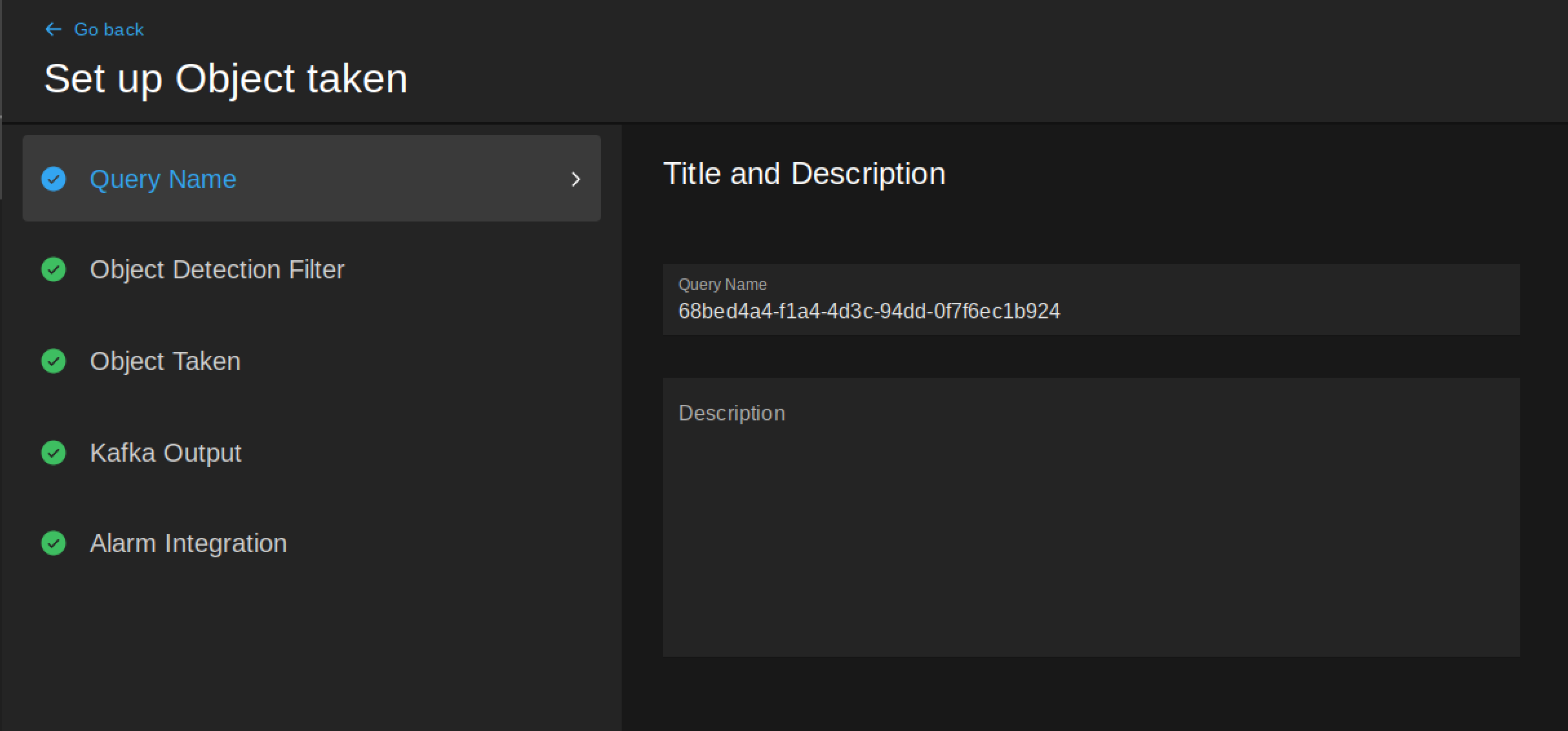
1. Query Name
Give your query a name to better identify it; a unique identifier is generated by default. A description can also be added (optional).
2. Object Detection Filter
Video ids
The thumbnail image of the previously chosen video is displayed here.
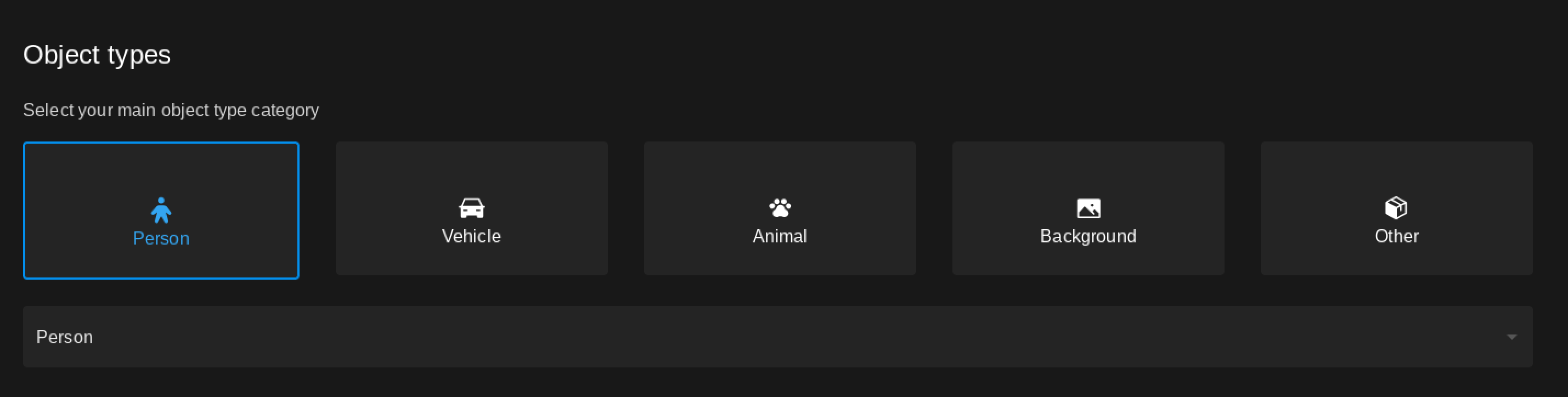
Object types
Select one or multiple object types you want to search for - Person is selected by default. Select a category, then click the dropdown menu to see the list of available object types for the selected object category.
Time interval
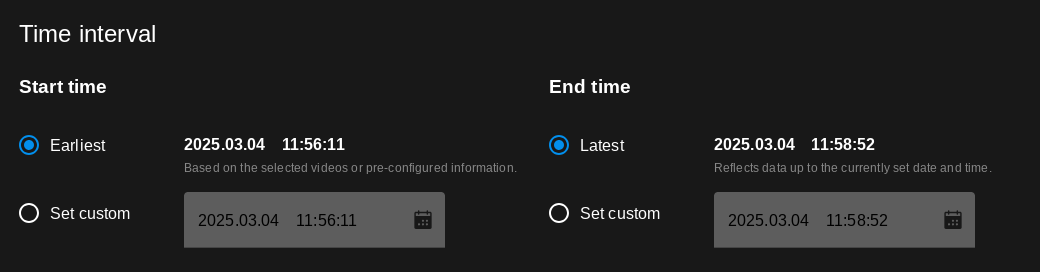
Select a time frame for the analytics to run, depending on the type of video selected above:
- Earliest: Run the query from the time shown (set during video registration as the beginning timestamp of the video).
- Latest: Run the query until the time shown (set during video registration as the end timestamp of the video).
- Given Date: You can select a custom start and end date and time to run the query on. Type the desired date and time or select them by clicking the calendar icon.
- Live: Analysis is run live, continously.
- Interval: You can select a custom start and end date and time to run the query on. Type the desired date and time or select them by clicking the calendar icon.
- Set interval to: Choose from the presets below to run the query on a given time inmterval.
- Sampling interval (in milliseconds, 5000 by default): The time interval between two samples of the object's position. The lower the value, the more precise the detection.
3. Object taken
Using windowing, it detects the presence of real data in one window and its absence in the subsequent window. If the object is taken, it triggers an alert.
-
Window length (in milliseconds, 2000 by default): The length of the window in which the object is detected.
-
Output type (Missing by default): The type of output to be generated. The options are Missing and Last seen. If Missing is selected, the query will trigger an alert when the object is not detected in the subsequent window. If Last seen is selected, the query will trigger an alert when the object is last detected in a window.
4. Kafka Output
Sets the Kafka topic where the results will be sent - filled in by default.
4. Alarm Integration (optional)
The query can optionally be integrated with third-party systems, such as Milestone XProtect or a webhook to trigger alarms.
Currently, alarm integration with Milestone XProtect or Webhook is only available for live videos.
Webhook
The query can be configured to send detections to a Webhook URL.
- URL: The URL of the Webhook.
- Custom header key: The key of the custom header.
- Custom header value: The value of the custom header.