Object Detection
Object detection in zone is a query that detects objects within a specified area of a video. The query can be configured to detect specific object types and filter results based on various parameters.
Prerequisites
- IRIS+ Professional is configured with at least one indexer.
- Query types and classifiers have been registered.
- At least one video has been added.
Setup
-
Select one or more videos from your workspace Click +Set up New Query.
-
Select Object detection in zone from the list of query types.
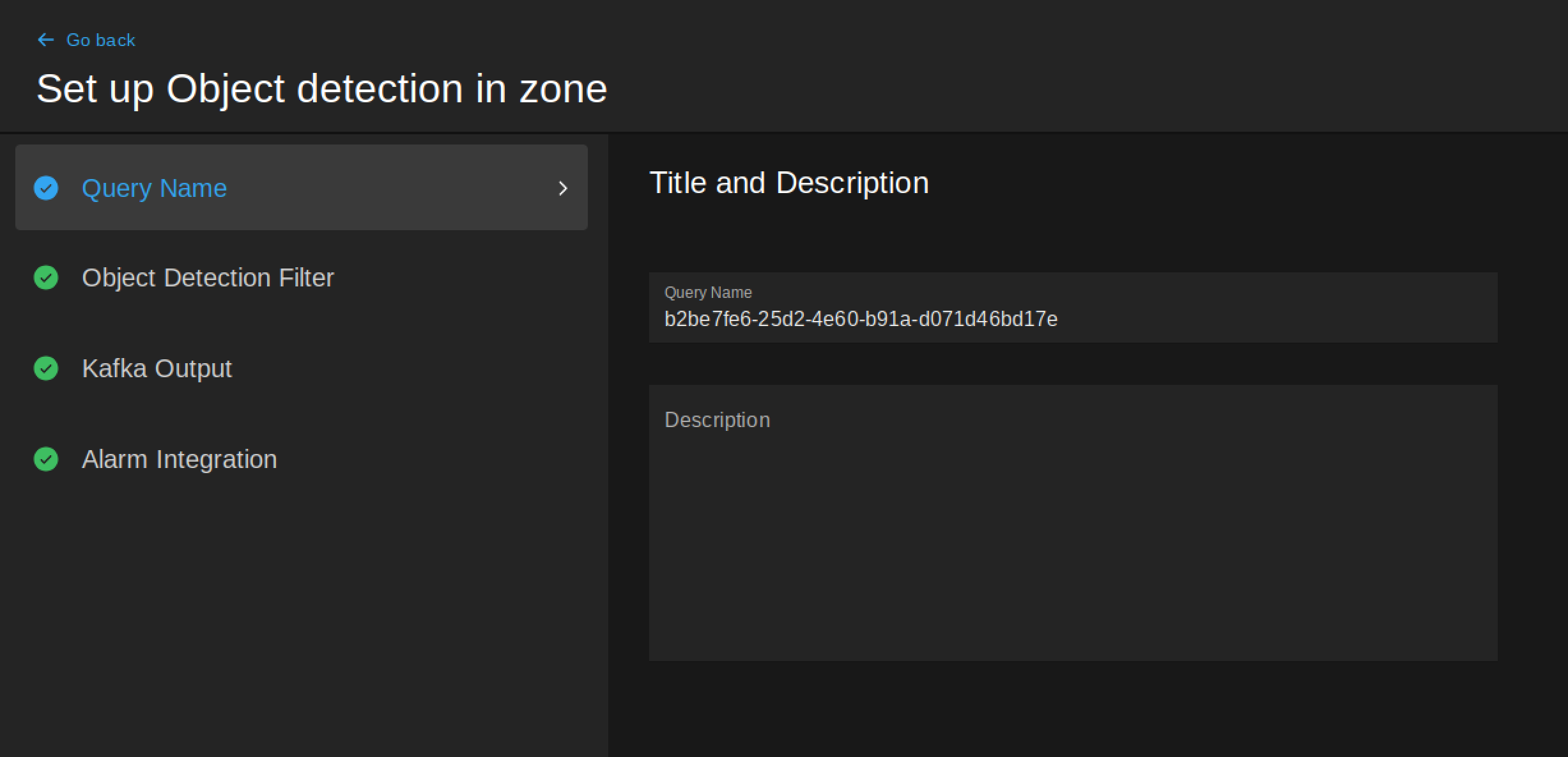
1. Query Name
Give your query a name to better identify it; a unique identifier is generated by default. A description can also be added (optional).
2. Object Detection Filter
Video ids
The thumbnail image of the previously chosen video is displayed here.
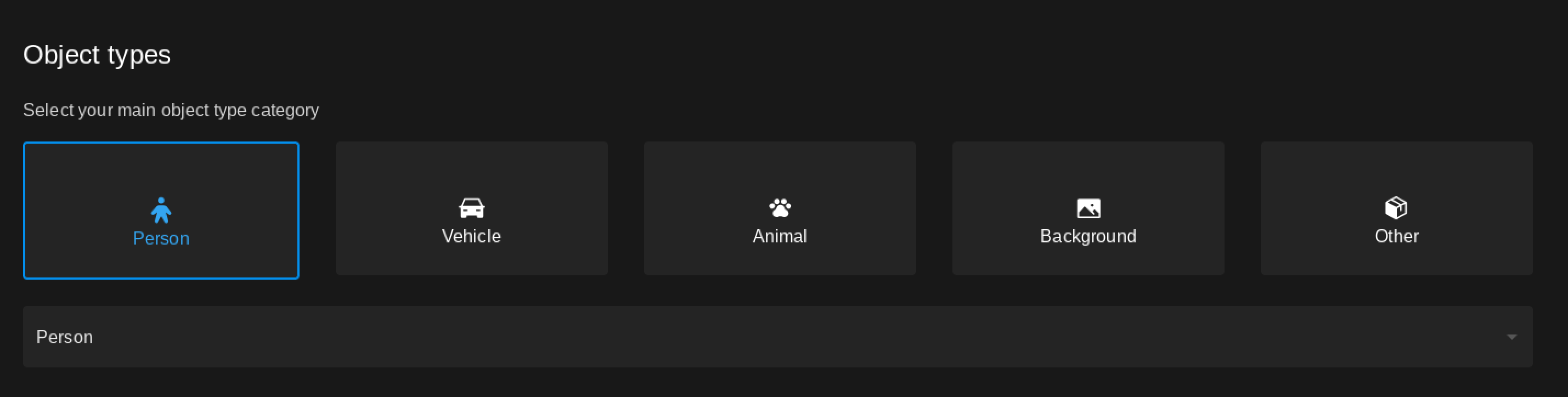
Object types
Select one or multiple object types you want to search for - Person is selected by default. Select a category, then click the dropdown menu to see the list of available object types for the selected object category.
Time interval
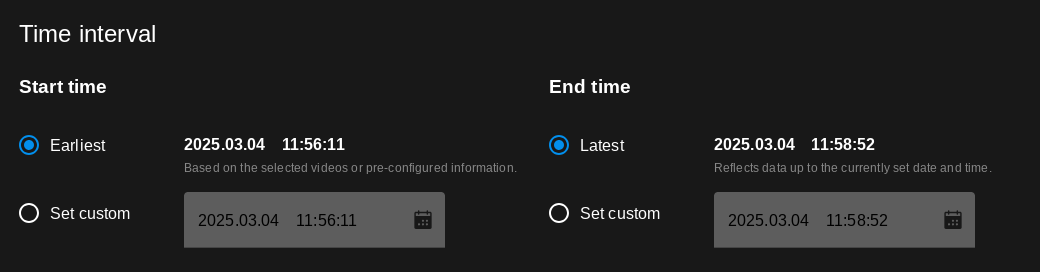
Select a time frame for the analytics to run, depending on the type of video selected above:
- Earliest: Run the query from the time shown (set during video registration as the beginning timestamp of the video).
- Latest: Run the query until the time shown (set during video registration as the end timestamp of the video).
- Given Date: You can select a custom start and end date and time to run the query on. Type the desired date and time or select them by clicking the calendar icon.
- Live: Analysis is run live, continously.
- Interval: You can select a custom start and end date and time to run the query on. Type the desired date and time or select them by clicking the calendar icon.
- Set interval to: Choose from the presets below to run the query on a given time inmterval.
-
Minimum track duration (in milliseconds): The minimum time objects need to be in the scene to trigger an alert. If the time duration of the track is less than the min track duration parameter, the query will not trigger an alert. If set to 0, the query will trigger an alert immediately once the object enters the area.
-
After out of zone fire again: If ticked, the query will trigger an additional alert if the person leaves the scene.
-
Use bottom reference point: Choose either the center or the bottom of the bounding box as a reference point to determine whether the object is within the ROI.
Add attributes (optional)
Object attributes
Some object types may have additional attributes available for filtering, such as helmet and gender for Person objects. You can select any number of them to further filter your results; For isntance, adding the nohelmet attribute in to Person objects will filter detections so that only people not wearing helmets will show up in the Query results. Multiple attributes can be filtered at the same time (e.g. both female and vest).
- Click the +Attribute button.
- Select an attribute from the list.
- Tick the checkbox of the respective attribute to toggle filtering - i.e. whether to look for people with helmets or without them.
- You can keep adding additional attributes if the object type allows them. Click the X button to remove an attribute.
3. Kafka Output
Sets the Kafka topic where the results will be sent - filled in by default.
4. Alarm Integration (optional)
The query can optionally be integrated with third-party systems, such as Milestone XProtect or a webhook to trigger alarms.
Currently, alarm integration with Milestone XProtect or Webhook is only available for live videos.
Webhook
The query can be configured to send detections to a Webhook URL.
- URL: The URL of the Webhook.
- Custom header key: The key of the custom header.
- Custom header value: The value of the custom header.
All done! Clicking Run Query will immediately start the analysis then opens the Result screen of this query. Alternatively, clicking Save & Exit saves the query without running it.
Clicking Preview will run the query in preview mode, showing the results in the Query Results screen without saving the query. This is useful for testing the query before running it on the entire video.